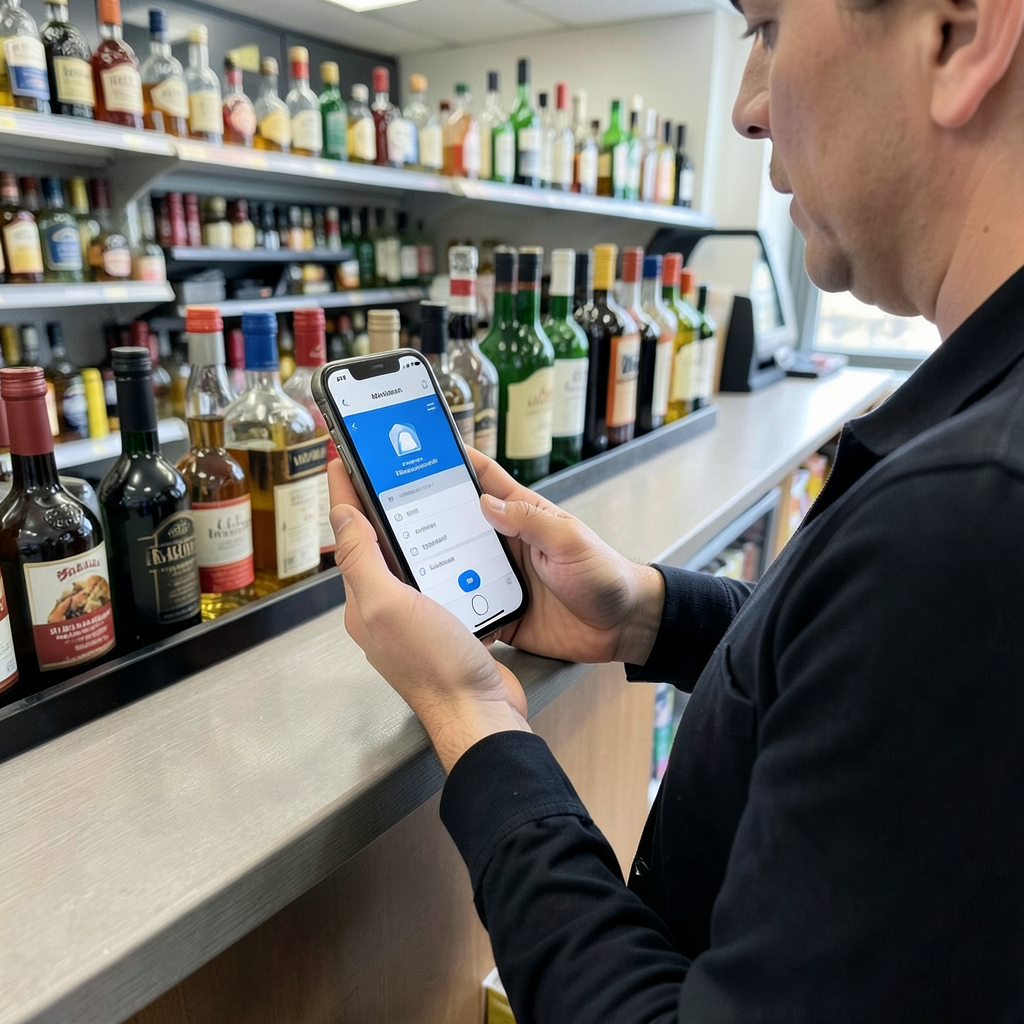

A new government policy taking effect this week will allow individuals to verify their age using a digital identity application when purchasing alcohol.
From Tuesday, digital proof of age will become valid at licensed premises, retail outlets, festivals, and concert venues across England and Wales following amendments to the Licensing Act.
The legislative update provides consumers with the option to leave traditional physical identification documents at home.
Government officials have acknowledged that widespread adoption among businesses will require time, though ministers have indicated intentions to broaden the scheme’s application to tobacco products and vaping items.
Stephanie Peacock, serving as digital government minister, outlined the significance of the change.
Licensed establishments including pubs, restaurants, music venues, and festivals collectively conduct millions of age verification checks annually.
The minister emphasised that the legal modification would eliminate the need to carry physical identification or disclose personal details such as names and residential addresses simply to confirm age eligibility.
This development aims to enhance personal safety during evening outings.
The minister clarified that participation would remain voluntary for both individuals and businesses, with traditional physical identification remaining a legitimate method of age verification.
Digital identity credentials will be distributed through third-party mobile applications, with platforms such as Yoti already operational for age-restricted cinema ticket purchases.
During alcohol transactions, customers will authenticate their identity through methods including facial recognition scanning or code entry.
The authentication process generates a temporary QR code or token valid for approximately 30 seconds, which staff members can scan to confirm proof of age.
Certain applications may additionally require PIN entry alongside photographic verification transmitted to a terminal for comparison with the presenting individual.
Multiple digital identity applications are anticipated to enter the marketplace, and the government has advocated for interoperability between systems to enable consumers to select a single application for use across all participating retailers.
The technical infrastructure is designed to function without internet connectivity, mirroring the operational principles of contactless payment systems.
Under the revised legislation, establishments possess no legal obligation to maintain acceptance of physical identification documents, as digital and traditional verification methods hold equivalent legal standing.
Nevertheless, ministers do not anticipate significant numbers of businesses discontinuing physical ID acceptance, given that refusal would alienate certain customers and imposes no financial burden on vendors.
The hospitality sector has expressed support for the initiative.
Allen Simpson, chief executive of UKHospitality, described the introduction of digital age verification as a constructive development offering enhanced flexibility and convenience for both patrons and operators.
The voluntary implementation is expected to streamline customer experiences by enabling secure age verification directly from mobile devices.
Simpson indicated the organisation anticipated collaborative engagement with government officials to ensure cost-effective deployment with multiple technology providers available, without imposing excessive regulatory burdens on the sector.
The precise financial implications for businesses remain undefined, though officials suggest integration into existing tablet devices may be feasible.
The policy arrives after Greater Manchester Mayor Andy Burnham previously abandoned a more extensive digital identity programme that had been proposed by his predecessor.