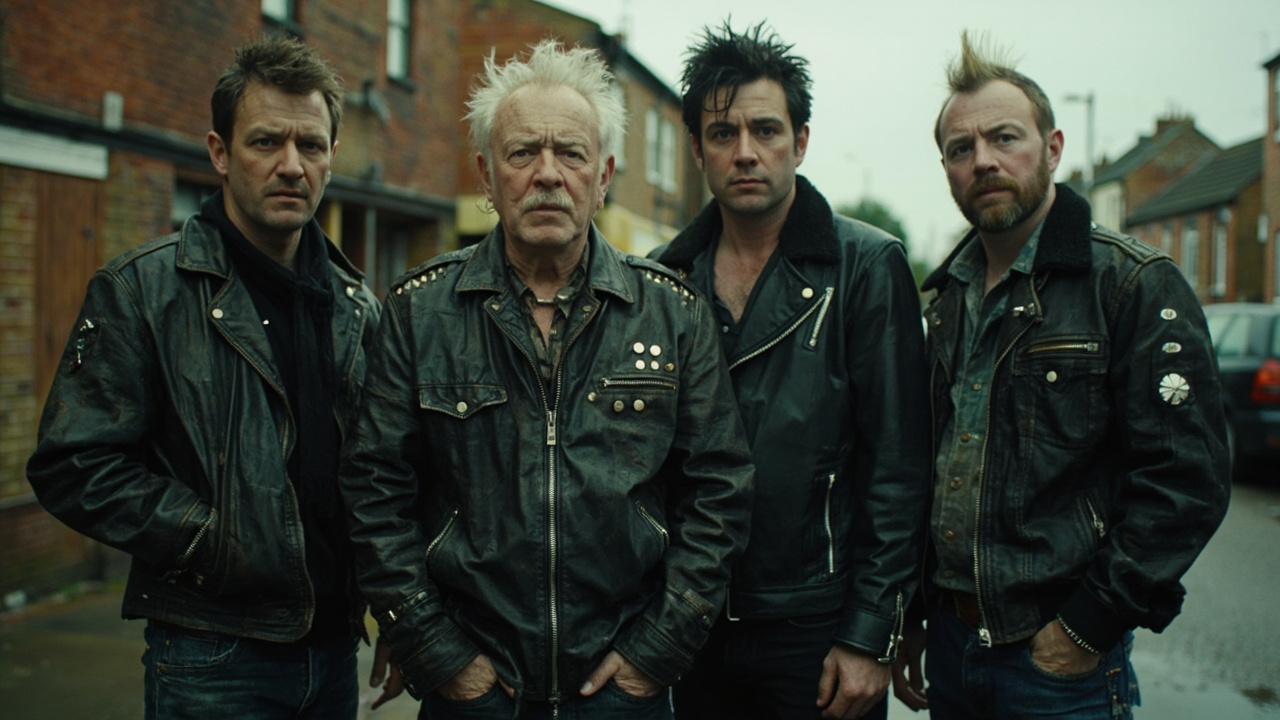

God Save the…is it King now? Well, you won’t have to wait long to find out, as the Sex Pistols have announced a UK and Ireland tour.
The faces of punk will be joined by musician Frank Carter in their The Anarchy In The UK tour later this year, to mark five decades since the release of their eponymous hit track.
They will perform in London, Edinburgh, Glasgow and Dublin, with others also added.
The band reunited last year for several gigs.
Formed in 1975, the band is made up of guitarist Steve Jones, drummer Paul Cook and bass guitarist Glen Matlock for a limited run of shows in December. It is unclear if John ‘Johnny Rotten’ Lydon will appear; he previously promised never to return to the group, after he fought a high-profile court battle against the rest of the band in a bid to stop their songs being used in a Disney+ series of their story, called Pistol.
November 26th 1976: The SeX PiSToLs released their debut single, ANARCHY IN THE U.K.#ItsTheOnlyWayToBe…. pic.twitter.com/GwKvf6qki7
— PuNk and Stuff (@PunKandStuff) November 26, 2019
The tour will kick off at Dublin’s 3 Arena on December 7 before moving to Edinburgh’s Corn Exchange on December 9 and Glasgow’s O2 Academy on December 10.
The tour will end with two nights in London, one at the O2 Academy Brixton on December 18 and a final show at Eventim Apollo on December 20.
The Sex Pistols disbanded in 1978, and frontman Lydon formed Public Image Ltd, also known as PiL.
The group were known for their rebel spirit and speaking out against the monarchy and the established political order, in provocative lyrics with songs including God Save The Queen and Anarchy In The UK.
Remembering the first year of the band being together, Cook said: “It was kind of like a commando raid. I don’t even think a lot of places knew we were playing there.
“We just turned up and set up. It was all a learning curve for us, getting out there and playing live, we were learning on the job.
“With Anarchy, I think we tapped into a feeling of unrest around the country at the time. The message was pretty simple – just have a go and get out there and do whatever you want to do. It was a new world.”
The group returned in 2024 with Carter, known for Gallows and Frank Carter and The Rattlesnakes, joining the lineup on vocals.
Cook said: “We’ve had a blast. People want to come and see us play live.
“If I must say so myself, we are a great live band.”
Jones added: “If it ain’t fun, I ain’t doing it. I’m too old for b*******.”
The band will also play shows this summer at The Piece Hall, Halifax (July 11), Castlefield Bowl, Manchester (July 12), Cardiff Castle (August 1) and Scarborough Open Air Theatre (August 2).