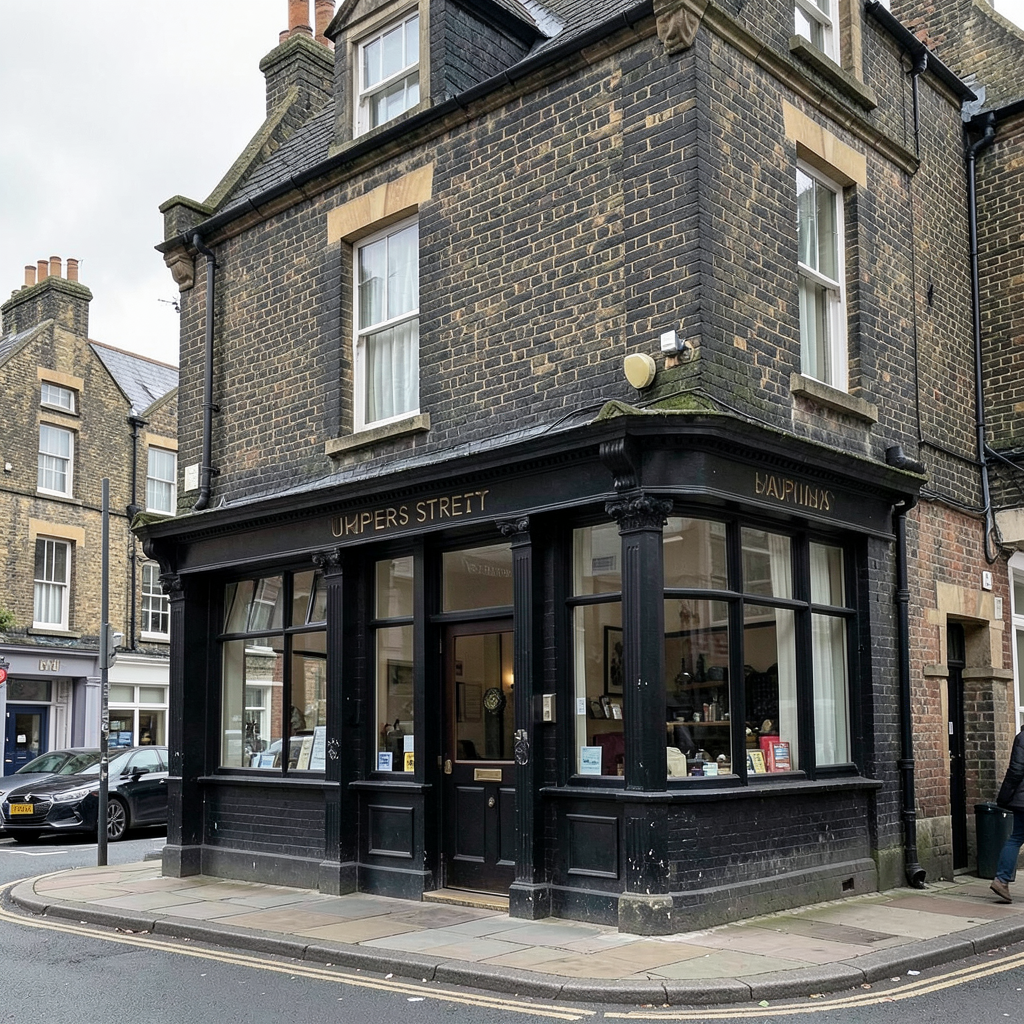

A historic public house on Upper Street in Islington that once served as a launching pad for numerous rock and punk acts is now available for lease.
The Hope and Anchor, constructed in 1880, became a central venue for emerging musical talent during the 1970s, with groups performing in the basement space that accommodated audiences of up to two hundred people.
The establishment gained prominence as a critical hub for punk and new wave performers seeking early opportunities to perform live.
Multiple renowned artists including Dire Straits, The Clash, Madness, and U2 played some of their initial shows at this location before achieving mainstream success.
Audiences paid approximately thirty pence for entry, with performances featuring equipment transported through a chute originally designed for moving beer barrels.
The building features three distinct levels comprising an open-plan bar area, a basement performance space, and a theatre facility on the upper floor.
Greene King, the pub company managing the property, has listed the venue as available for a new operator capable of developing a diverse entertainment programme.
The advertisement highlights the opportunity for someone with experience in music venues, late-night hospitality, or entertainment-focused businesses to restore the establishment’s reputation for live performances.
The venue commenced operations as a jazz and blues destination in the early 1970s before Fred Grainger and Dave Robinson assumed management and transformed it into a centre for punk performances.
Dave Robinson subsequently went on to establish Stiff Records.
Admission prices during this period varied between thirty and seventy-five pence.
The Stranglers established a regular Sunday evening residency by the mid-1970s.
The Damned recorded their promotional footage for the song New Rose within the basement area in 1976.
Elvis Costello delivered his inaugural paid performance in London at this location on 27 July 1977.
The Cure and Joy Division both performed for audiences of approximately thirty people in 1978.
The band Madness filmed the visual content for their track One Step Beyond within the basement confines.
The Police delivered one of their initial London appearances at this location on 23 February 1978, at a time when they had not yet secured a recording contract.
U2 made their inaugural appearance in Britain at the venue on 4 December 1979, appearing under the alternative name V2 and performing for an audience of nine individuals.
Additional performers at various stages included members who would later become associated with the Pogues, Eurythmics, and Spandau Ballet.
The establishment also appeared in the production Breaking Glass and featured in the Madness promotional video.
However, in 1985 the venue’s entertainment licence was revoked, leaving the property vacant for an extended period before squatters temporarily occupied the space.
By 1988 the interior had been considerably altered during the local area’s regeneration, converted into a wine establishment with the Victorian-era features removed.
Historic England awarded the structure protected status in 1994, safeguarding its external architecture.
Musical programming resumed in 1996 through the introduction of regular Friday evening events, with fifteen separate acts performing across the three levels during the inaugural event.
The band Keane made their initial live appearance at this location, while The Libertines reportedly filled the basement area to capacity, with accounts suggesting Pete Doherty departed through a lavatory window.
James Smith commenced duties as general manager in 2011 and spearheaded initiatives to re-establish the venue’s connection with independent music.
The Hope Theatre commenced operations on the first floor in 2013.
The artist Birdy recorded her rendition of Skinny Love within the basement the following year.
Substantial improvement works took place in 2016, encompassing the installation of updated sound equipment, climate control systems, an expanded performance area, and improved illumination, with the stage configuration restored to resemble its 1970s arrangement.