
A remarkable monument at the Regent’s Park zoological collection depicts a First World War military officer alongside an American black bear, commemorating an unlikely friendship that would eventually influence one of literature’s most beloved characters.
Winnie-the-Pooh originated as a tribute to Winnipeg, a Canadian bear who took up residence at the London institution in 1914.
Lieutenant Harry Colebourn, a Canadian veterinary officer deployed to the Western Front, had acquired the cub from an Ontario hunter after the animal’s mother was shot.
He designated the young bear with his hometown’s name before transporting her to Salisbury Plain, where she served as an unofficial regimental mascot.
When Colebourn’s unit received orders for France, he entrusted the bear to the zoological gardens for her protection.
The animal rapidly became a favourite among patrons, particularly young Christopher Robin Milne, whose father A.A.
Milne would later immortalise her name through his children’s literature.
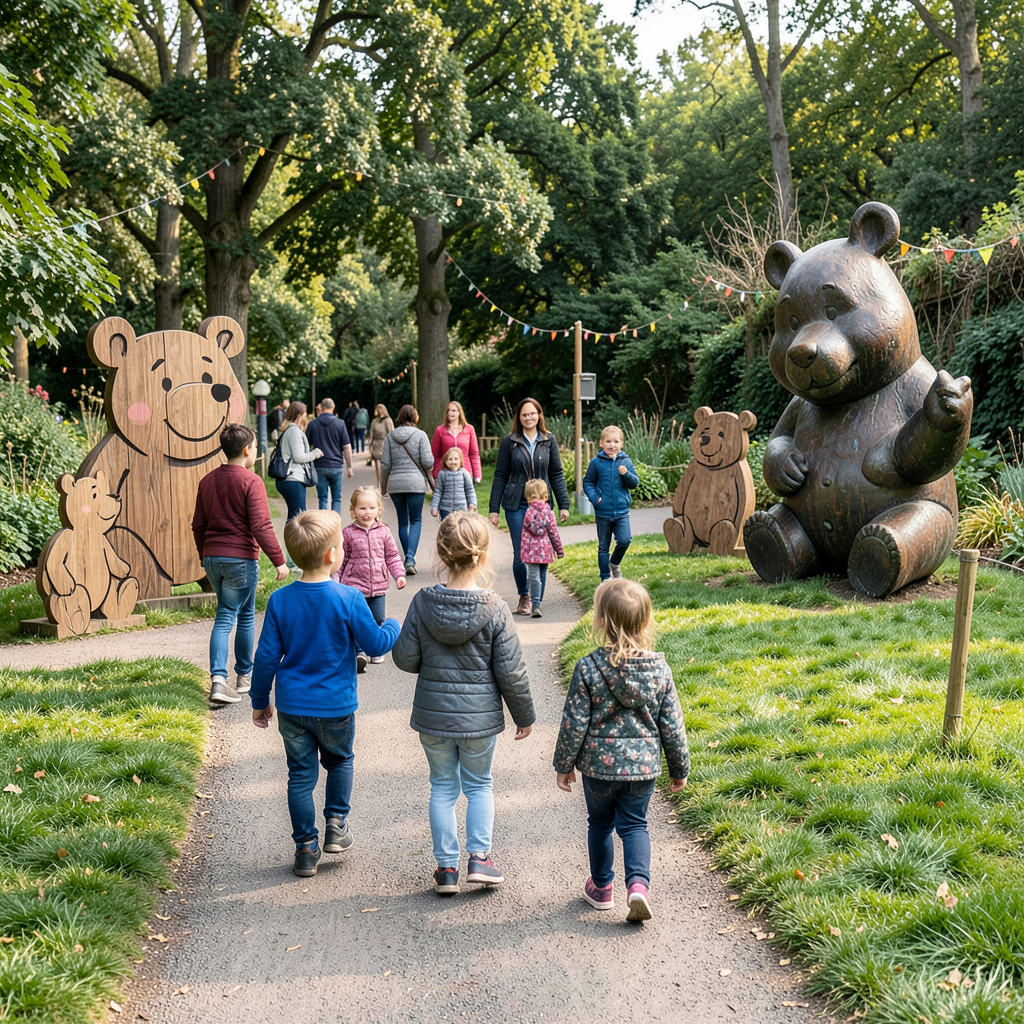
A recent addition to the attraction enables families to engage with this historical narrative.
An interactive expedition running from October through early November 2026 traces the adventures of Pooh and his companion through the grounds, marking both the bicentennial of the Zoological Society of London and the centenary of the original Winnie-the-Pooh collection.
The experience draws from a contemporary publication released by the publisher, authored in the tradition of the original stories to honour the character’s legacy.
Participants commence their journey at the Mappin Terraces, the enclosure historically referred to as Bear Mountain, where keepers share authentic details about the real bear.
Guests obtain navigational materials depicting the fictional duo’s nocturnal expedition, with elaborate installations animating the narrative throughout the site.
Young visitors compile keepsake notebooks inspired by the stories while observing resident species including hippos, equines, and galagos, collecting commemorative tokens.
The activity concludes at the penguin habitat, where children obtain exclusive memorabilia.
Colebourn survived the conflict and advanced to senior rank before returning to his veterinary practice in his Canadian hometown in 1920.
Opting to leave the bear at the London institution, he enabled her to continue delighting visitors in the manner that had enchanted the Milne family.
This decision cultivated a literary tradition spanning numerous decades and countless readers worldwide.