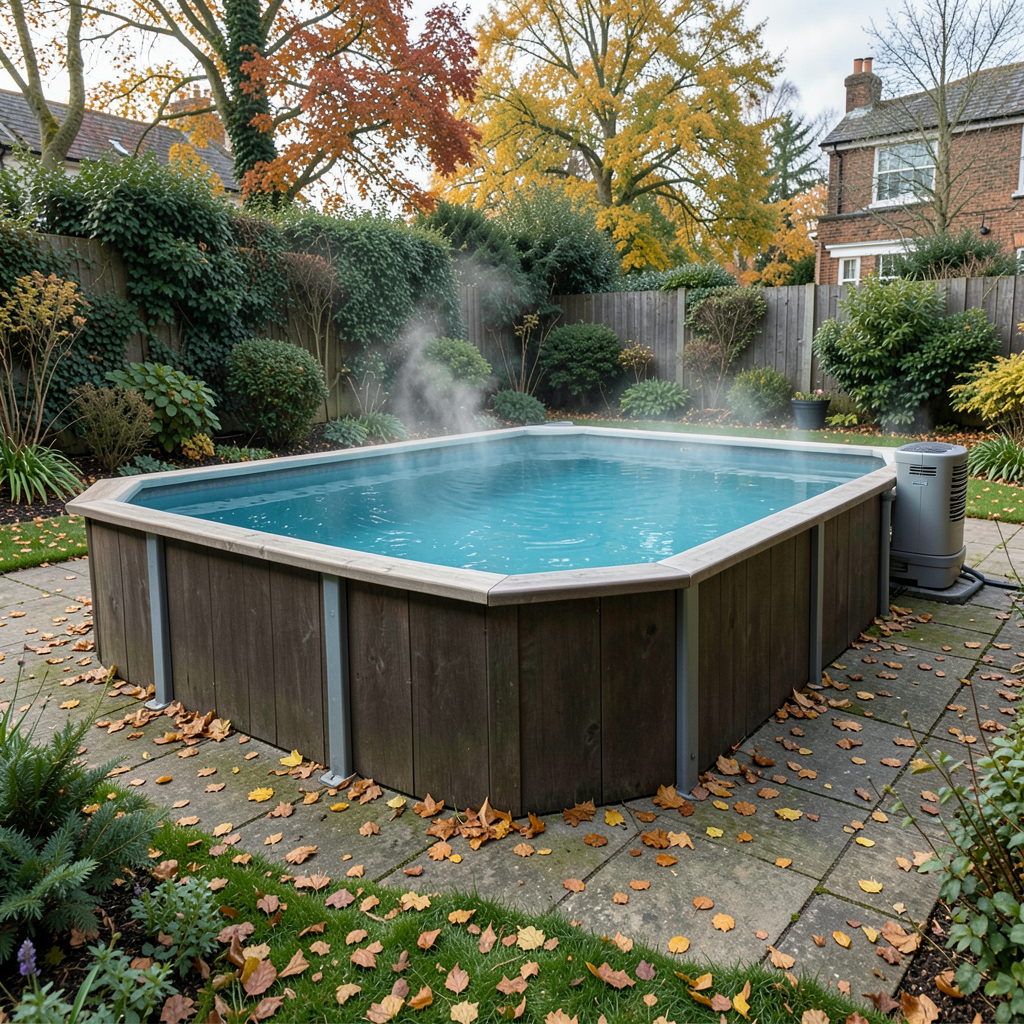

London residents who own outdoor swimming pools face substantial energy costs as temperatures begin to drop during the autumn months.
Industry calculations reveal that warming a standard 30,000-litre pool by a single degree Celsius requires approximately 34.9 kilowatt-hours of electricity.
At the current Ofgem average electricity tariff of 26.32 pence per kilowatt-hour, each degree of temperature increase translates to roughly £9.18 on a household energy bill.
Reheating pool water by five degrees Celsius would demand around 174.4 kilowatt-hours, amounting to approximately £45.91 before accounting for thermal losses through evaporation and other factors.
According to Alex Essex, managing director of outdoor maintenance specialists PBSR CO, many pool owners underestimate the ongoing expenses associated with maintaining an outdoor swimming facility.
Essex noted that failing to budget for the full operational requirements represents a common oversight among homeowners who invest in pool installation.
Understanding the complete cost of ownership prior to installation enables more accurate financial planning and informed decision-making.
While these calculations apply specifically to direct electric heating systems, many swimming pools utilise heat pump technology, which offers improved energy efficiency.
A heat pump capable of producing four units of thermal energy from each unit of electricity would require just 8.7 kilowatt-hours to raise water temperature by one degree Celsius, costing approximately £2.30 per degree increase.
The efficiency of heat pumps does fluctuate based on ambient air temperatures and water conditions.
Beyond heating expenses, pool owners must also account for pump electricity consumption, chemical treatments, water usage, and regular maintenance servicing.
Seasonal electricity price variations between summer and autumn months remain relatively modest.
Ofgem data indicates that direct debit tariffs shift from 26.11 pence per kilowatt-hour during July through September to 26.32 pence per kilowatt-hour from October through December.
This seasonal adjustment adds only seven pence to the cost of raising a 30,000-litre pool by one degree Celsius.
The more considerable challenge emerges from the assumption that energy requirements remain constant as outdoor conditions become cooler.
Heat dissipation accelerates significantly in colder, windier weather, particularly when pools remain uncovered.
Specialist assessments identify evaporation as the primary mechanism of thermal loss from exposed swimming pools.
Consistent use of appropriate pool covers can generate meaningful reductions in heating expenditure, though actual savings depend on local climate conditions, pool characteristics, and how regularly the cover is removed or replaced.
Homeowners intending to extend their swimming season beyond summer should incorporate their pool’s water volume, heating system type, applicable electricity tariff, desired water temperature targets, and cover usage patterns into their financial planning.
Comparing electricity meter readings across comparable days while maintaining consistent cover application provides a more reliable assessment of operational costs.
Pool covers represent one of several controllable variables available to owners seeking to manage expenses.
Those preparing to winterise their facilities should adhere to manufacturer guidelines to safeguard pumps, heating units, and pipework against freezing conditions.
Covers require secure installation according to design specifications, and children and animals should be prevented from accessing the pool area.
Standard thermal covers do not constitute safety devices.
Poolside surfaces may become hazardous during cold conditions, presenting slip and fall risks.
PBSR CO advises consultation with local pool specialists regarding covers and winter preparation measures appropriate to individual installations.
Search trend data indicates sustained interest among London residents in pool maintenance, with approximately 22,880 monthly searches recorded for pool upkeep and related terminology, reflecting continued concern among property owners regarding running costs and property value considerations.