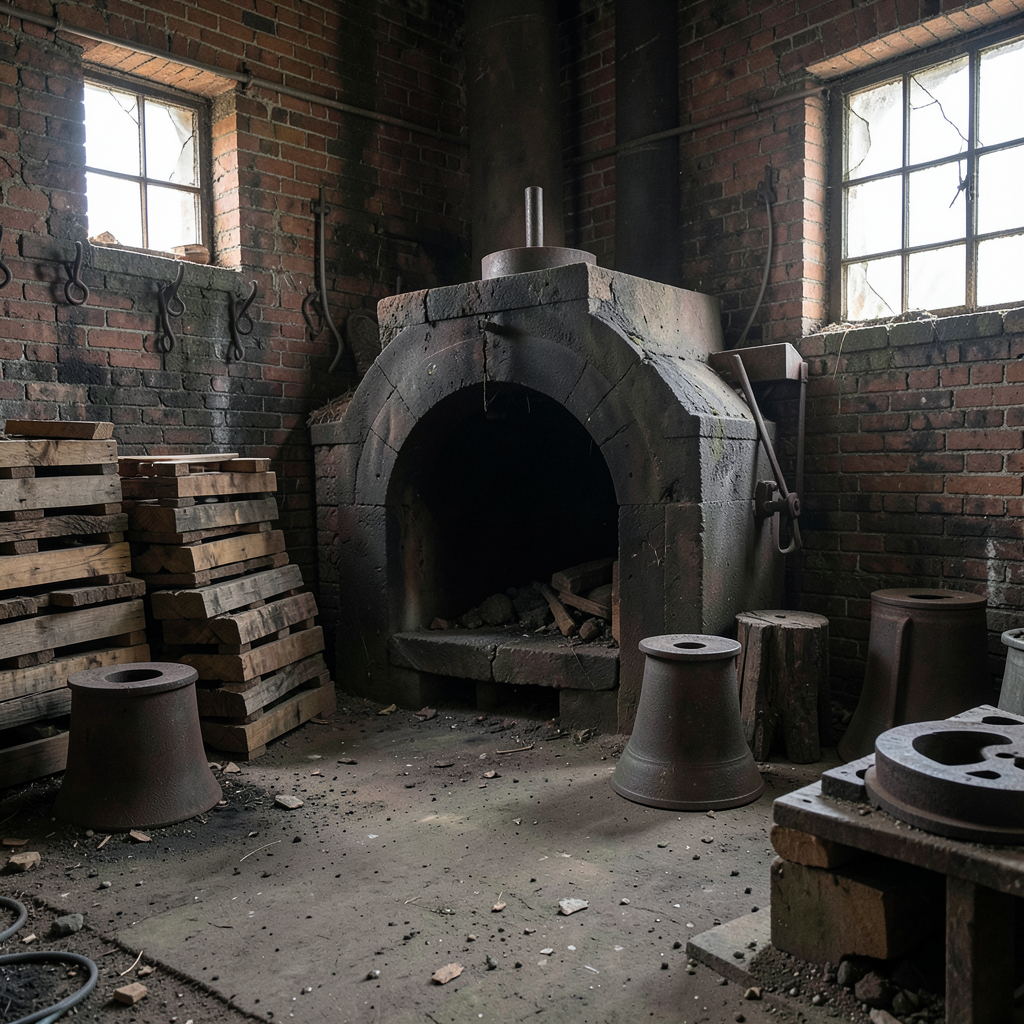

The Whitechapel Bell Foundry holds a unique place in British manufacturing history, producing two of the world’s most renowned bells, both of which bear distinctive cracks.
The Liberty Bell, housed in Philadelphia, draws millions of visitors annually as an emblem of American independence.
The famous bell fractured during its initial testing and has not been rung since.
Meanwhile, the chime produced by Big Ben, universally recognised as the planet’s most iconic timepiece, derives its unmistakable resonance from a substantial fissure running along the bell’s casing.
For almost four and a half centuries, this East End establishment operated as a bustling production facility, manufacturing thousands of bells that continue to sound in churches and public structures worldwide.
Britain’s longest-running manufacturing enterprise shuttered its operations in June 2017, leaving the future of its Grade II* listed premises unresolved.
The company’s origins date back to 1570, when production began at Essex Court in the City of London.
In 1716, master founder Richard Phelps produced the clock bell for St Paul’s Cathedral, subsequently named Great Tom.
By the time operations ceased, the foundry had occupied its Whitechapel Road location for 250 years.
The structure originally served as a coaching inn called The Artichoke, which suffered damage during the Great Fire of London before closing its doors in 1738.
The foundry established itself at the premises and, in 1751, received an order for a bell destined for the Pennsylvania State House in Philadelphia.
The item was dispatched across the Atlantic in 1752 but sustained damage during the crossing, resulting in a crack.
Craftsmen subsequently melted the bell down on two separate occasions, recasting it each time.
The finished bell was installed in the steeple of the Pennsylvania State House, the very location where the nation’s founding fathers drafted the Declaration of Independence in 1776.
Abolitionist movements subsequently adopted the bell’s inscription as a symbol of their cause.
The script, taken from Leviticus 25:10, proclaiming liberty throughout the land unto all its inhabitants, resonated with both suffragettes and civil rights advocates.
In 1846, a significant and irreparable fracture developed in the bell while it was being tolled to mark George Washington’s birthday.
The foundry’s other celebrated undertaking was the creation of the Great Bell of Westminster, universally known as Big Ben, which was produced on 10 April 1858.
An earlier specimen had been manufactured in Stockton-on-Tees in 1856 and transported to London ahead of the clock tower’s completion.
Workers positioned this initial bell on a provisional gantry in New Palace Yard for testing purposes, but the hammer’s excessive weight generated a major crack.
The damaged item was dismantled and returned to Whitechapel, where it was melted down to create the replacement, which weighs 13.5 tonnes.
Spectators gathered as the bell was conveyed from Whitechapel across London Bridge aboard a carriage drawn by sixteen adorned white horses.
The second bell also developed a fracture two months after initial use, though in 1859 engineers resolved the problem by rotating it a quarter turn, ensuring the hammer struck an unaffected section.
A small square notch was cut around the existing crack to prevent further propagation, a modification that produced Big Ben’s characteristic flat tone.
Throughout its existence, the foundry supplied bells to destinations including Australia, Canada, and India.
Following the Second World War, the company experienced particular activity replacing instruments destroyed by German bombing raids.
As orders for substantial church bells diminished, production rights were subsequently transferred to other enterprises upon the foundry’s closure.
Proposals to convert the premises into a boutique hotel attracted controversy.
Despite receiving planning approval, the hotel development failed to progress.