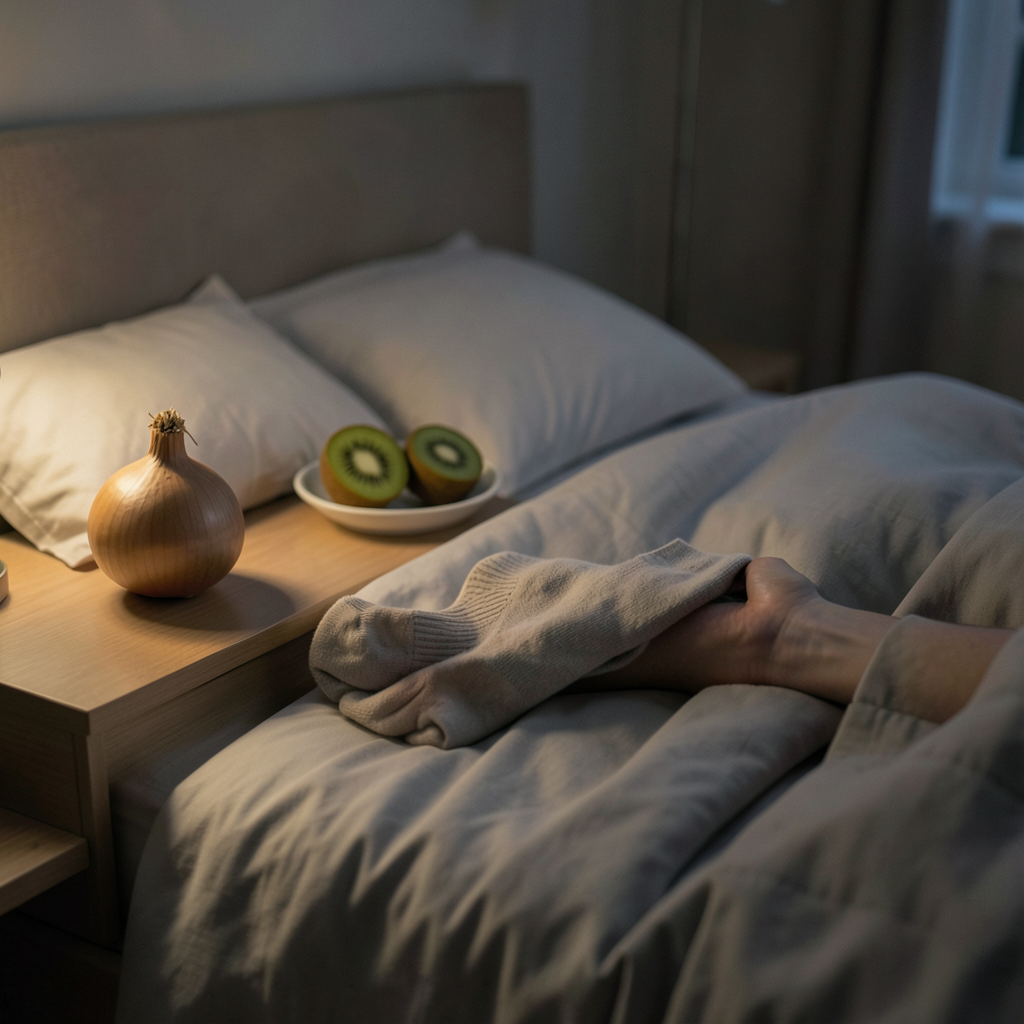

Research has revealed that approximately half of the British population has experimented with sleep techniques discovered through social media platforms, with some adopting unconventional methods such as consuming kiwi fruit before retiring for the night or placing onions inside their socks overnight.
A survey involving 2,000 UK adults uncovered that participants had attempted an average of two separate sleep improvement methods sourced from online content during the previous twelve months.
Popular approaches included steering clear of blue light emissions prior to sleep, with 39 percent of respondents adopting this practice.
Around three in ten individuals reported listening to white noise, brown noise, or sleep-themed audio content, while 28 percent had experimented with herbal tea consumption as a sleep aid.
More unusual recommendations gaining traction through influencer channels included eating kiwi fruit at bedtime, which seven percent of those surveyed had tried.
A further seven percent had prepared a so-called sleepy girl mocktail beverage, while six percent had placed onions inside their socks while sleeping overnight.
The research, which simultaneously surveyed 13,000 adults spanning twelve countries, indicated that British consumers demonstrate greater caution regarding viral sleep suggestions compared to their international counterparts, with 48 percent having experimented with such techniques over the past year.
This figure falls considerably below the global average of 71 percent, which included responses from the United States, Australia, France, and China.
Sleep specialist Olivia Arezzolo has collaborated with Novotel for a sleep-focused educational programme aligned with the hotel chain’s international Longevity Week initiative.
The event runs from September 7th through to September 13th, with additional collaborators including Olympic surfing gold medallist Kauli Vaast, culinary specialist Alfie Steiner, former Paris Saint-Germain midfielder Javier Pastore, and marine wildlife expert Kaushiik Subramaniam.
Speaking about the proliferation of sleep guidance available through digital channels, Arezzolo noted that distinguishing between evidence-based recommendations and unsubstantiated viral trends presents considerable difficulty.
She observed that while certain widely-circulated sleep techniques possess scientific grounding, numerous others represent oversimplified, exaggerated, or ultimately ineffective approaches.
The survey also revealed that despite 66 percent of UK respondents indicating that social media platforms have complicated their ability to place trust in wellness guidance, more than a quarter had nonetheless implemented online sleep recommendations despite harbouring doubts about their capacity to identify unreliable information.
Among those who had experimented with magnesium-based products in spray or supplement form, only 17 percent reported any measurable improvement in sleep quality.
Merely five percent of participants found bedtime mocktails, tart cherry juice consumption, or eating kiwi fruit before sleep to produce beneficial effects, with the success rate dropping to just four percent among those who had attempted placing onions in their socks overnight.
Perhaps unexpectedly, only 31 percent of respondents reported that avoiding blue light or electronic device usage before bed had enhanced their sleep outcomes.
White noise assistance proved helpful for 26 percent of participants, while sleep monitoring technology delivered effective results for a mere 14 percent.
The research, conducted through OnePoll, additionally found that 16 percent of British respondents had embraced a sleep trend only to subsequently discover it lacked scientific support.
Nevertheless, 65 percent of those surveyed expressed greater concern for their long-term physical wellbeing compared to five years prior, with 69 percent maintaining that obtaining adequate rest plays an essential role in achieving a longer, healthier lifespan.
Thirty-nine percent indicated dissatisfaction with their current sleep management abilities, while 56 percent acknowledged that they would not characterise their existing sleep patterns as being of satisfactory quality.
Arezzolo emphasised that sustainable health improvements require abandoning the pursuit of miraculous solutions or viral shortcuts in favour of developing consistent routines tailored to individual circumstances.
She explained that everyday decisions carry cumulative significance for long-term wellbeing, noting that the forthcoming initiative would examine how small, practical choices concerning diet, rest, physical activity, and social engagement can contribute to improved overall health outcomes.