
The London Open House Festival returns in 2026 with its annual programme of accessible buildings across the capital, running from September 12-20.
The event provides rare opportunities to explore architectural treasures and historic spaces that remain closed to visitors for most of the year.
Among the highlights are former cinema venues transformed into places of worship, acclaimed contemporary designs, and the former residences of notable historical figures.
The schedule also encompasses guided walks and special programming at cultural institutions throughout the city.
Full details and booking information are available at programme.openhouse.org.uk.
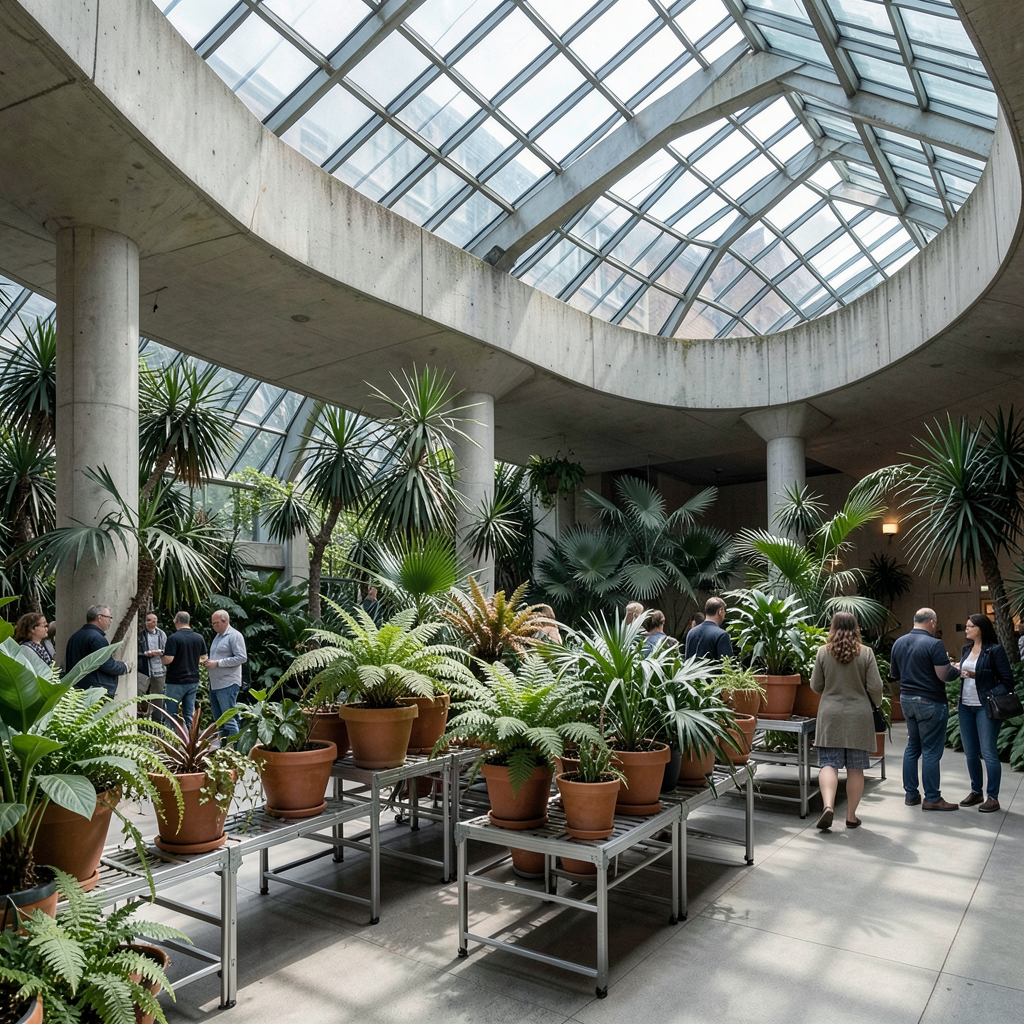
The Barbican conservatory restoration Visitors are offered a final opportunity to tour the Barbican conservatory before comprehensive restoration work commences in 2027 and continues through 2030.
The garden space was conceived in 1982 by the practice Chamberlin, Powell and Bon.
The programme includes a guided walk led by the head gardener, presentations from the Barbican Renewal team, and the chance to take home a propagated cutting supplied by Wayward Plants.
Canal Club garden The Canal Club occupies a modernist community centre at Waterloo Gardens Belmont Wharf in Bethnal Green, constructed in 1978 to a design by Julian Sofaer.
The straightforward open-plan structure features a community garden established by boat dwellers moored adjacent to the site.
A drop-in session incorporates children’s creative activities and pizza making.
Hampstead historic properties Historic Hampstead presents opportunities to visit two significant former residences.
The former home of Sigmund Freud, who settled there after escaping Nazi persecution, now operates as a museum housing the analyst’s celebrated couch which was transported from Vienna.
Nearby lies the garden where John Keats composed Ode to a Nightingale.
Fenton House contains lawns, an orchard and a collection of period instruments from the 1700s, while Burgh House serves as an art gallery and local museum.
Both properties represent historic dwellings converted for public use.
Floating residence in Highgate A striking residential project at 6 Wood Lane was completed in 2016 by Birds Portchmouth Russum Architects.
The four-storey structure, termed an ark, sits above a stone base on an elongated plot amid Victorian villas.
Tours conducted by architect Mike Russum reveal distinctive features including an entrance footbridge, elevated living spaces and a balcony extending over a curved terrace with views towards woodland.
Modernist development nearby Architecture enthusiasts may also tour Highpoint flats on North Hill, constructed in 1935 to designs by Berthold Lubetkin, who additionally created the penguin enclosure at London Zoo.
The development reflects Lubetkin’s vision for urban housing design.
Converted cinema in Kilburn The Gaumont State Theatre on Kilburn High Road opened in 1937 as a super cinema accommodating 4,004 patrons.
Its illuminated tower takes inspiration from the Empire State Building.
During its entertainment heyday, the venue presented performances by prominent musicians including The Beatles and David Bowie.
The building now houses Ruach City Church and rarely welcomes visitors, though public access on a single day permits exploration of the interior and its Wurlitzer organ.
Further northwest in Harrow, the former Grosvenor Cinema stands as a Grade II listed Art Deco structure.
Its ornate proscenium arch and fluted columns have been preserved during restoration undertaken by its current owners, the Zoroastrian community.
Recording studio heritage Strongroom on Curtain Road in Shoreditch has operated since 1984 as a recording facility responsible for numerous landmark British recordings.
The complex maintains its position as east London’s largest independent studio.
Notable artwork decorates the walls, created by Jamie Reid of Sex Pistols fame, incorporating druidic symbols and sacred geometry to express messages concerning hope, environmental awareness and opposition to fascism.
Visitors may explore the spaces where artists such as Nick Cave, Radiohead, The Prodigy, The Chemical Brothers, the Spice Girls and Little Simz recorded their material.