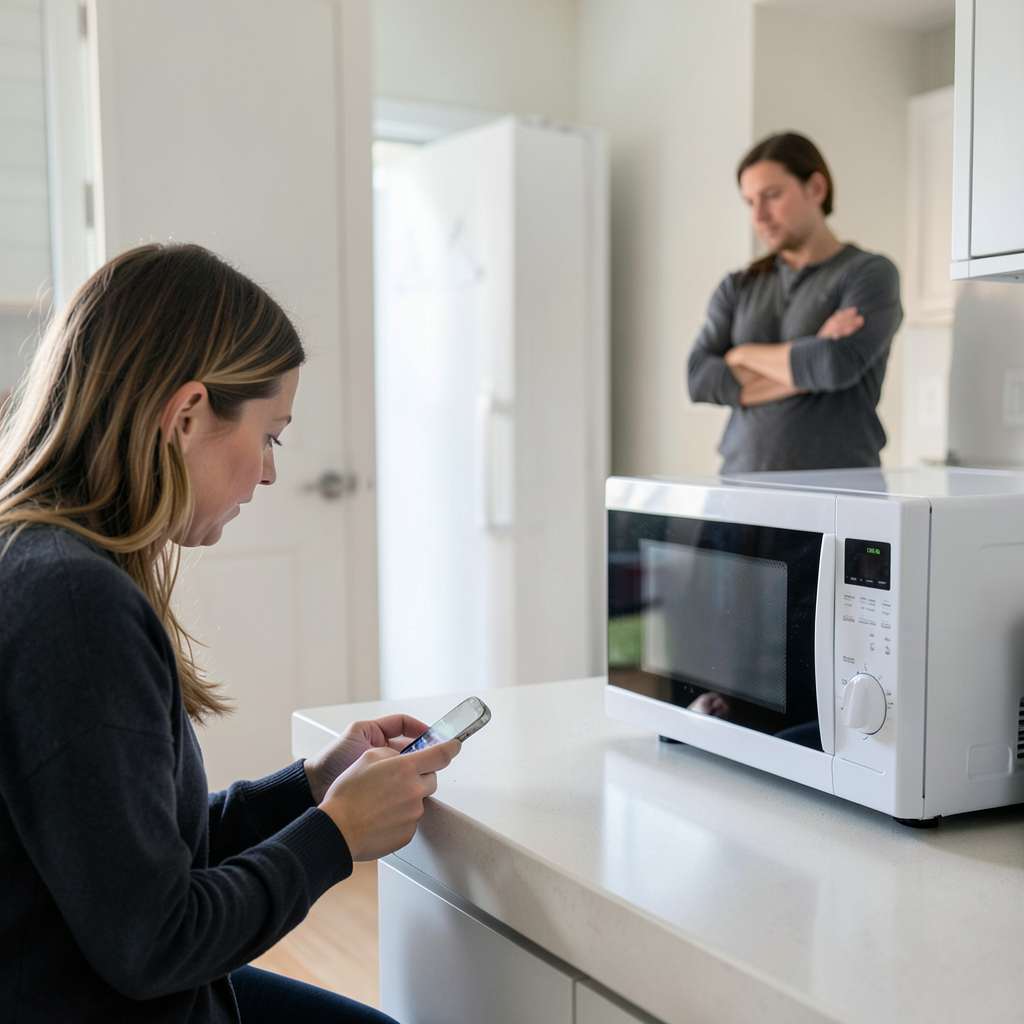

Declining meaningful dialogue ranks among the primary indicators that a romantic connection is losing its vitality, research has revealed.
The study, which questioned 2,000 adults, also identified other relationship warning signs.
These included partners opting to browse their smartphones rather than engage in conversation, and couples choosing to watch television in separate rooms.
Additional red flags encompassed no longer participating in enjoyable activities as a pair, sleeping apart, and neglecting to prioritise romantic outings.
Among respondents who acknowledged remaining in unfulfilling romantic partnerships longer than advisable, 63 per cent cited hoping circumstances would get better, while 33 per cent expressed apprehension about change.
Research indicated this inclination to persist with unsatisfactory arrangements extends beyond personal relationships to household items.
Approximately 47 per cent of those surveyed had possessed a microwave for a duration exceeding that of their most recent romantic partnership.
A further 36 per cent confessed to continuing to use a malfunctioning appliance despite its poor performance.
The investigation was commissioned by SharkNinja, which also collaborated with Olivia Attwood, who discussed her own experiences with relationships and appliances that have lost their initial appeal.
Attwood shared insights about human attachment to familiar objects, noting that while recognising the value in retaining items that have served well over extended periods, upgrading certain aspects of life remains crucial.
The survey discovered that microwave owners cited comparable justifications for keeping ageing devices as those given for remaining in unsatisfying relationships.
Among those hanging onto an old appliance, 59 per cent stated it was because the device still functioned, while 36 per cent indicated they had simply not found time to obtain a replacement.
Such inertia leads many individuals to endure frequent annoyances, including food being heated unevenly, cooking processes taking longer than expected, and previously crispy items losing their texture.
The research also revealed that considerable numbers struggle to discard numerous items well past their practical usefulness.
This included old charging cables and electronic accessories, retained by 52 per cent of respondents, and clothing that no longer fitted properly, also held onto by 52 per cent.
Dated financial documents and administrative paperwork were kept by 46 per cent, while birthday cards and handwritten correspondence remained in possession of 43 per cent.
Household items can unexpectedly become sources of discord when relationships end.
Some 13 per cent reported having disputed with a former partner over ownership of domestic equipment.
Televisions, gaming consoles, and microwaves featured prominently among the most commonly contested belongings, accounting for 43 per cent, 29 per cent, and 27 per cent of such disagreements respectively.
Meanwhile, 19 per cent acknowledged retaining an appliance following a separation primarily to prevent their former partner from acquiring it.
Carolyn Anderson from SharkNinja UK, which is preparing to launch the Ninja CRISPi Microwave, observed that British consumers often tolerate items that technically continue operating despite awareness that superior performance could be achieved.