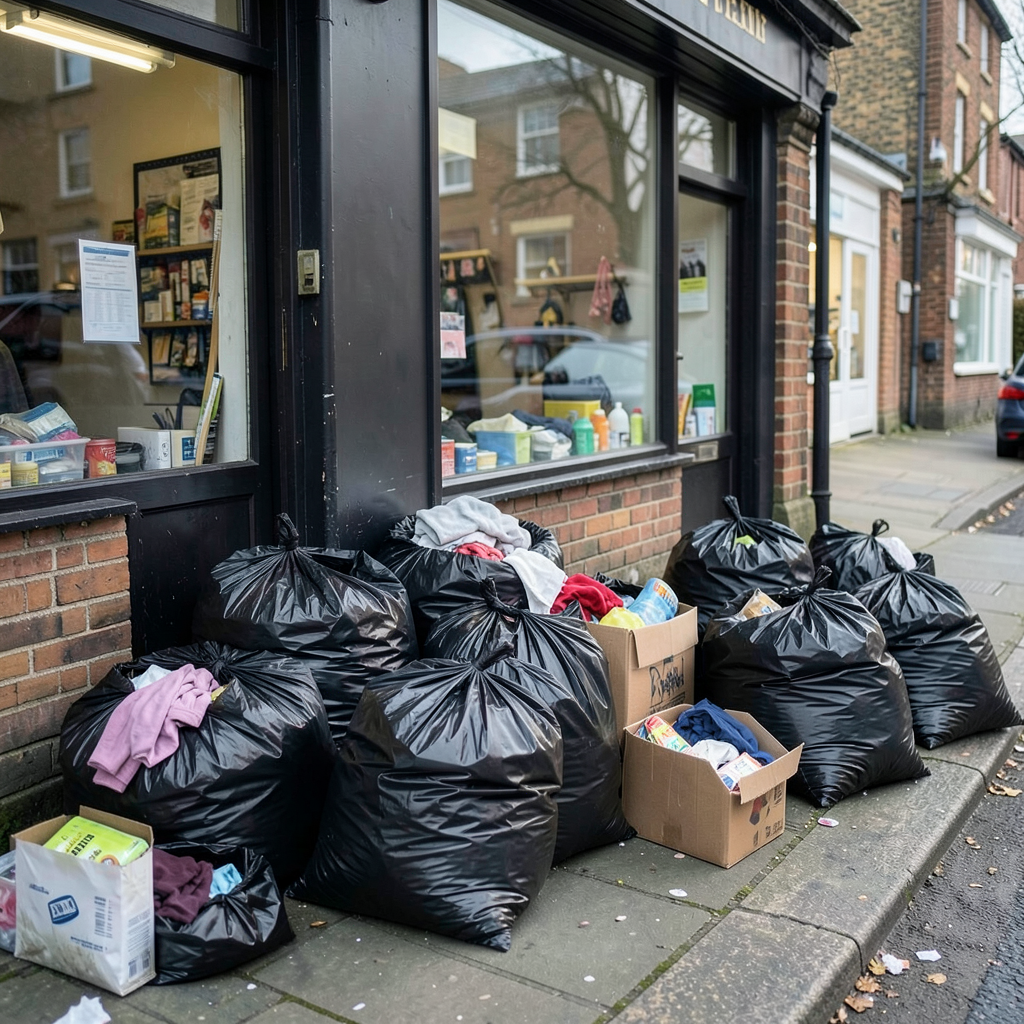

St Luke’s Hospice has issued an appeal for public support following continued incidents of illegal dumping at its retail locations.
The charity operates multiple shops across Harrow and Brent, with staff reporting a persistent daily problem of individuals depositing bags containing clothing, furniture, and household goods outside store fronts, often leaving them unattended through the night.
St Luke’s Hospice relies on public donations to fund care services for individuals with life-limiting conditions.
Many items abandoned outside premises are unsuitable for resale and must be disposed of at the charity’s expense.
Sharon DeFreitas, Retail Operations Manager at St Luke’s Hospice, stated that donors frequently believe they are contributing usable goods.
Once items are placed on the pavement, they transition from potential donations to waste material, Ms DeFreitas noted.
The charity cannot accept, sell, or utilise such items, with disposal costs falling upon the organisation.
Each bag left outside diverts funds away from patient care services.
The problem has intensified at the Harrow Weald branch, where significant volumes of goods have been discovered scattered across the pavement.
Items left outdoors frequently sustain weather damage or become contaminated by wildlife.
Bags are also occasionally torn open, causing contents to spread across the surrounding area.
Once items remain outside overnight, their condition and safety cannot be guaranteed, according to Ms DeFreitas.
Wildlife contamination, exposure to the elements, or interference from members of the public can render goods completely unusable.
The issue also diverts staff and volunteers from their primary responsibilities.
Rather than assisting customers, organising incoming donations, and generating revenue for patients and families, employees are occupied with clearing dumped waste from external areas.
The charity has requested that supporters deliver contributions during normal business hours and pass them directly to personnel on duty.
This system enables shop teams to efficiently identify textiles suitable for recycling.
Arrangements can be made in advance for collection of larger items such as furniture and electrical equipment.