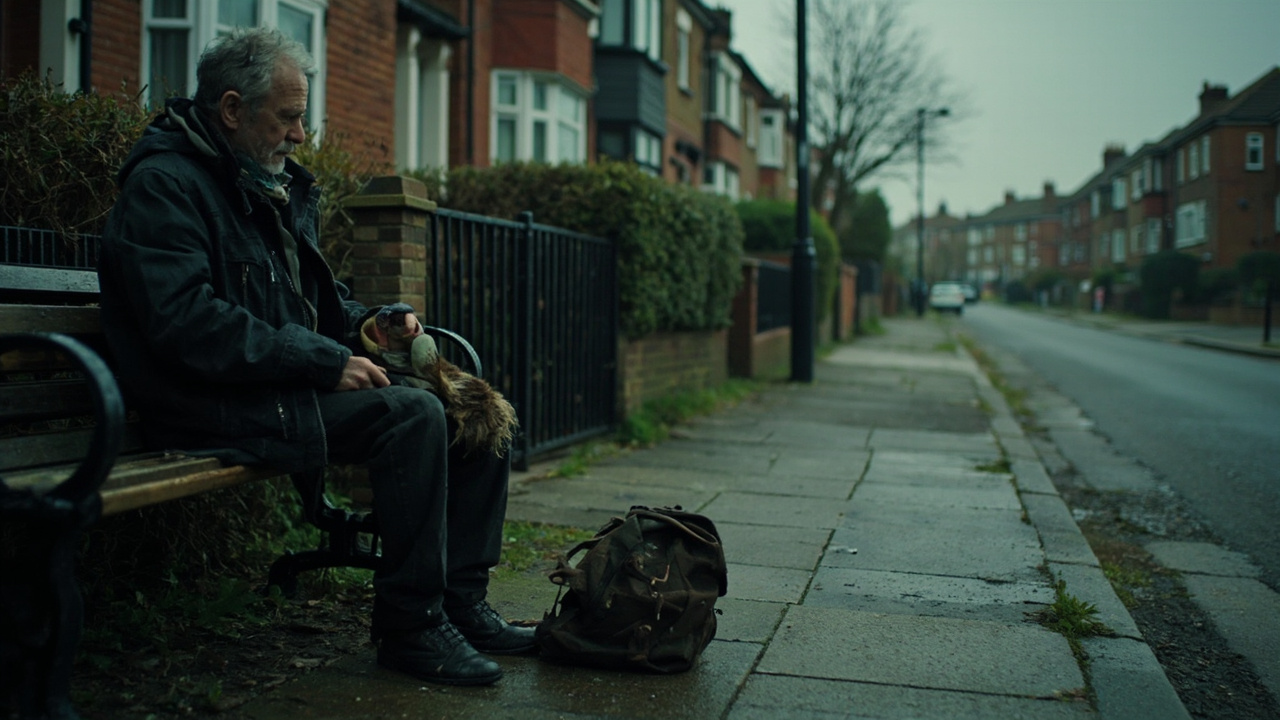

Harrow Chronicle: The London councils with the biggest rise in homelessness due to relationships breaking down has been revealed rising by 712.5 per cent between 2020 and 2025.
The London councils with the biggest rise in homelessness due to relationships breaking down has been revealed. Tower Hamlets recorded the sharpest increase, with homelessness applications linked to relationship breakdown rising by 712.5 per cent between 2020 and 2025. Newham topped the list for the highest overall number of cases, with 2,031 applications during the same period. The figures come from a study by Rayden Solicitors examining homelessness trends across 91 local authorities. The study highlights growing concerns about the lack of legal protection for cohabiting couples when relationships end. Read more Bromley's best performing primary schools revealed as pupils get offers National Offer Day – Bexley's best-performing primary schools revealed Kayleigh Biswas-Gregory, senior associate at Rayden Solicitors, said: "While this data captures relationship breakdown more broadly, it highlights a wider housing risk that many couples face when relationships end. "It is a common misconception that unmarried couples have the same financial rights against each other on the breakdown of the relationship as married or civil partnered couples do. Sadly, the myth of the 'common law marriage' is just that, a myth, and cohabiting couples’ rights are, in fact, very different." The analysis focused on homelessness applications in which relationship breakdown was identified as the primary cause, uncovering high volumes across the capital as well as areas experiencing rapid increases. Following Newham, Havering recorded 1,069 applications, Southwark had 892, and Hillingdon saw 537. Other boroughs with significant numbers included Haringey (490), Greenwich (462), Sutton (415), Westminster (415), Enfield (397), and Croydon (349). Although London did not record the highest overall figures, it did see a 20 per cent rise in such cases over the five-year period, totalling 8,795 applications. Some boroughs saw much sharper growth. After Tower Hamlets, Croydon recorded a 513.79 per cent increase, followed by Greenwich at 219.15 per cent, Hillingdon at 181.93 per cent, and Islington at 130.77 per cent. The figures draw attention to the legal vulnerabilities faced by those who choose to cohabit rather than marry. Lehna Gardiner, partner at Rayden Solicitors, said: "Under the current law, cohabitees have limited rights compared to those who are married. When married couples divorce, they have significant legal protection within the family law framework. "The parties’ and children’s needs are prioritised, and the principles of equality and fairness are applied. If a spouse were to pass away, then the living spouse has automatic rights to inheritance, pension and insurance, among others. "For cohabiting couples, these principles unfortunately do not apply. This specifically leaves the financially weaker party in a vulnerable position in the event of a break-up. "Often, these are women who have focused less on their careers in order to look after children. Cohabiting couples cannot rely on the family law framework and have no financial responsibility to one another on separation." The findings underscore how policy and legal frameworks have failed to keep pace with changing family structures. Cohabiting families now make up 17.7 per cent of all families in the UK, and the number of cohabiting couples rose by 144 per cent between 1996 and 2021. With reforms to cohabitation laws expected to be discussed this spring, legal experts are urging couples to take steps to protect themselves in the absence of statutory safeguards. Rayden Solicitors recommend several steps for cohabiting couples, including ensuring property ownership arrangements reflect both parties' intentions, drafting a cohabitation agreement covering finances, housing, and child arrangements, and keeping wills up to date. The study calls attention to the urgent need for cohabitation reform and clearer public awareness about the limitations faced by unmarried couples, particularly in times of relationship breakdown and housing instability.