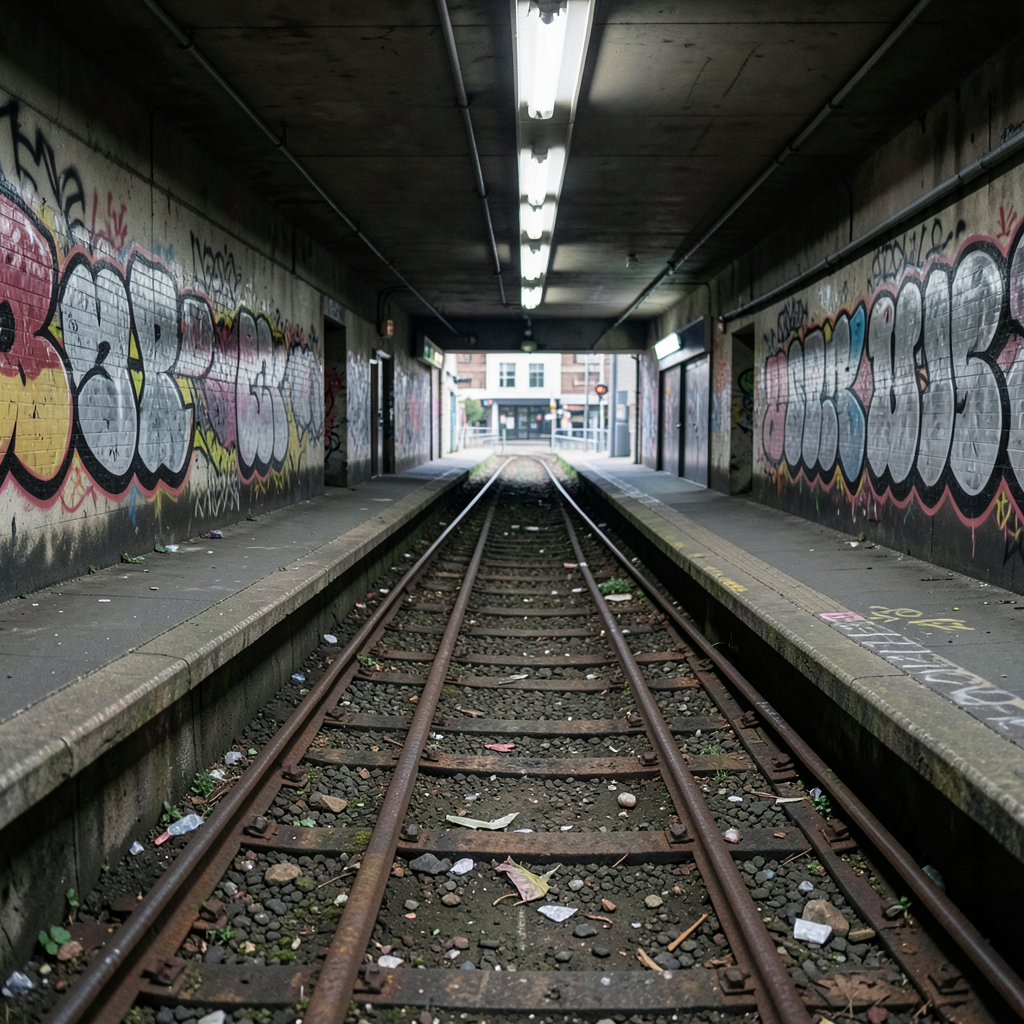

Just steps from the busy Piccadilly thoroughfare, a narrow passage leads to one of London’s abandoned Underground platforms with an extraordinary past. Down Street first welcomed passengers on March 15, 1907, initially operating as part of the Great Northern, Piccadilly and Brompton Railway before eventually becoming part of the Piccadilly line.
The station bore the unmistakable stamp of its era’s design philosophy, crafted by architect Leslie Green. Its exterior showcased the characteristic ox-blood coloured glazed bricks and curved windows on the upper level that became synonymous with early Tube construction.
Two elevators transported commuters down to the platforms situated approximately 22 metres below street level. However, the stop never attracted significant passenger numbers. Its positioning between Green Park, originally known as Dover Street, and Hyde Park Corner proved disadvantageous, as affluent residents of the nearby Mayfair district opted for more prestigious modes of transport. Additionally, rival stations lay just half a kilometre away.
The stop gradually began disappearing from train schedules. By 1918 it ceased operations on Sundays, and four years later officials identified it as a candidate for permanent closure to accelerate journey times along the newly expanded Piccadilly line. When neighbouring stations received escalator technology, Down Street’s fate was sealed and it shut its doors in 1932.
The lifts were dismantled and engineers constructed a new crossover section between Down Street and Hyde Park Corner, enabling westbound trains to reverse direction or undergo maintenance.
In 1939, as tensions escalated across Europe, the deserted tunnels joined other subterranean spaces repurposed as fortified refuges designed to sustain critical government functions during wartime bombardment. Workers subdivided the platform zones and corridors into conference chambers, administrative offices and rest quarters, installing telecommunications facilities along with washing and sanitary amenities.
A compact lift serving two passengers was positioned within the emergency stairwell. As German bombing campaigns pummelled the capital, the facility provided sanctuary for the Railway Executive Committee. Prime Minister Winston Churchill also utilized the space as a refuge and gathering point for cabinet discussions while permanent Command War headquarters were being established, bestowing upon the rough-hewn facility the rustic nickname of a barn.
Following hostilities, Down Street returned to abandonment until 2016 when the London Transport Museum began conducting visits through its Hidden London initiative.
The station holds another notable distinction. Its eerie deserted passages provided creative fuel for Neil Gaiman’s television adaptation and novel Neverwhere, serving as the fictional gateway to an underground realm. The venue also appeared in the video game Shadow Man, portraying it as the lair of the infamous Victorian serial killer.