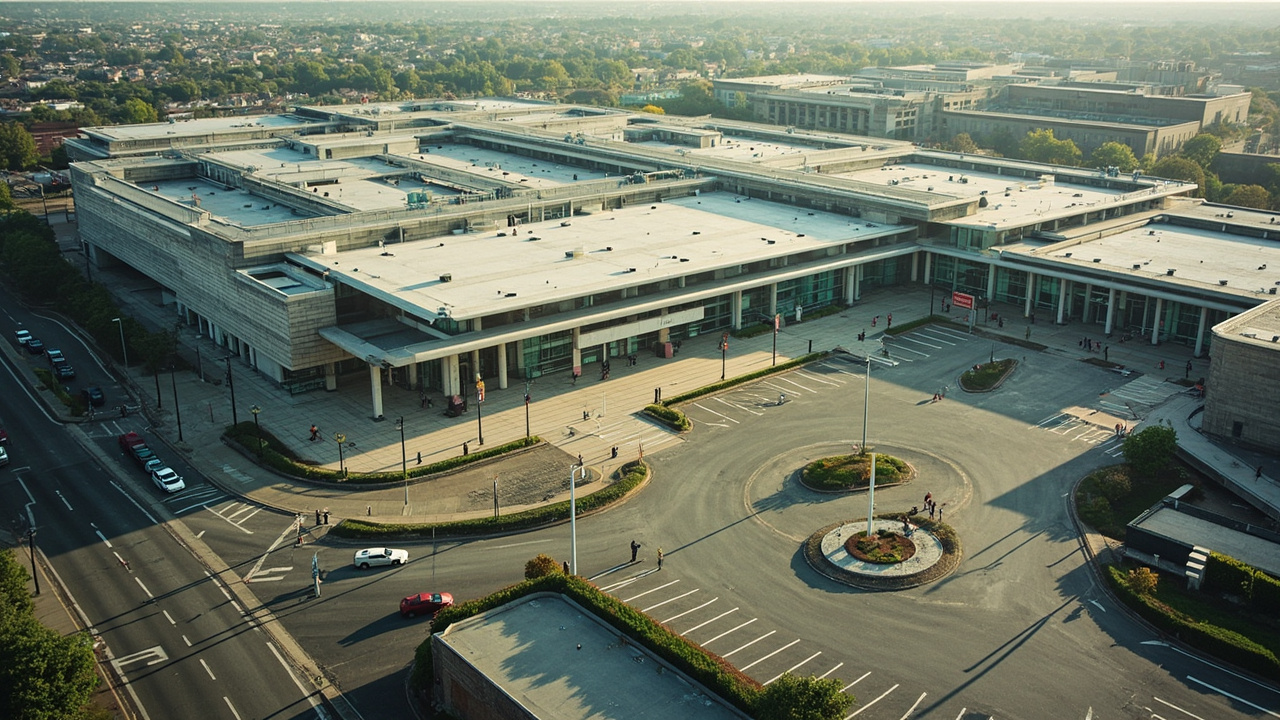

The pioneering retail complex welcomed its first visitors in March 1976, becoming Britain’s inaugural American-style suburban shopping centre.
Construction took place adjacent to the North Circular Road on grounds formerly occupied by Hendon Greyhound Stadium and a wastewater treatment facility. The development was crafted as a destination offering Londoners the convenience of parking and browsing shops regardless of weather conditions within its enclosed walkways.
Media reception proved divisive, with one writer describing it as a “futuristic concept” while another dismissed it as “hideous and soulless”.
The Marks & Spencer outlet remains in operation at the location, whereas the women’s fashion retailer Dorothy Perkins has since departed.
Property firm Hammerson committed the substantial amount of £20 million to construct the 800,000 square feet of retail space, featuring anchor tenants John Lewis, Fenwick and Marks & Spencer all located within the same building.
Barnet Council gave its endorsement to the project, though merchants in Hendon expressed concern that they would suffer financially from competition with a complex capable of housing 75 distinct retailers across the 52-acre property.
North London youth particularly enjoyed climbing on the animal sculptures at the centre.
Additional amenities included climate control, interior water features, and trading hours extending until 8pm—at a period when the majority of British retailers still shut their doors at 5pm and observed mid-week partial closure days.
The contemporary shopping complex received its official opening from the then Prince of Wales, currently King Charles III, and the adjacent thoroughfare Prince Charles Drive commemorates this event.
The venue ultimately drew customers from throughout the south east and established the blueprint for expansive retail developments such as Lakeside and Bluewater.
The John Lewis department store—similar to the Marks & Spencer and Fenwick branches—continues trading five decades after the centre’s inauguration.
Indeed, rivalry from more recent suburban shopping centres began impacting Brent Cross during the 1990s—its utilitarian concrete design appeared antiquated compared to contemporary glass and steel constructions.
Management responded by expanding to approximately 120 stores and constructing an additional multi-level parking facility with increased capacity, alongside renovations designed to introduce greater daylight into the interior.
This parking structure served as a filming location for the 1997 James Bond production Tomorrow Never Dies.
Residents of north London who recall playing on the distinctive animal sculptures during shopping excursions retain deep affection for this 1970s concrete retail palace.
While pedestrian access to the island location remains challenging, the recent construction of roughly 6,700 residential units at Brent Cross Town, coupled with the new Brent Cross West railway station on the opposite side of the North Circular Road, is establishing an entirely new neighborhood within a brief bus journey of this trailblazing centre, which nonetheless welcomed 10.6 million visitors during the past year.